
On 20 February 2025, we hosted the City of London Corporation’s first ever conference for SMEs (Small and Medium-sized Enterprises), themed around Access to Finance. Finding funding is one of the biggest challenges many business owners face as they try to start and grow their business, so we wanted to bring together industry experts, businesses, and organisations to share knowledge and make connections that would make it easier for the SMEs in the room to access the finance they need.
In this article, we’ll share some of the key quotes and takeaways from the event, so even if you couldn’t attend, you can take part of the knowledge that was shared!
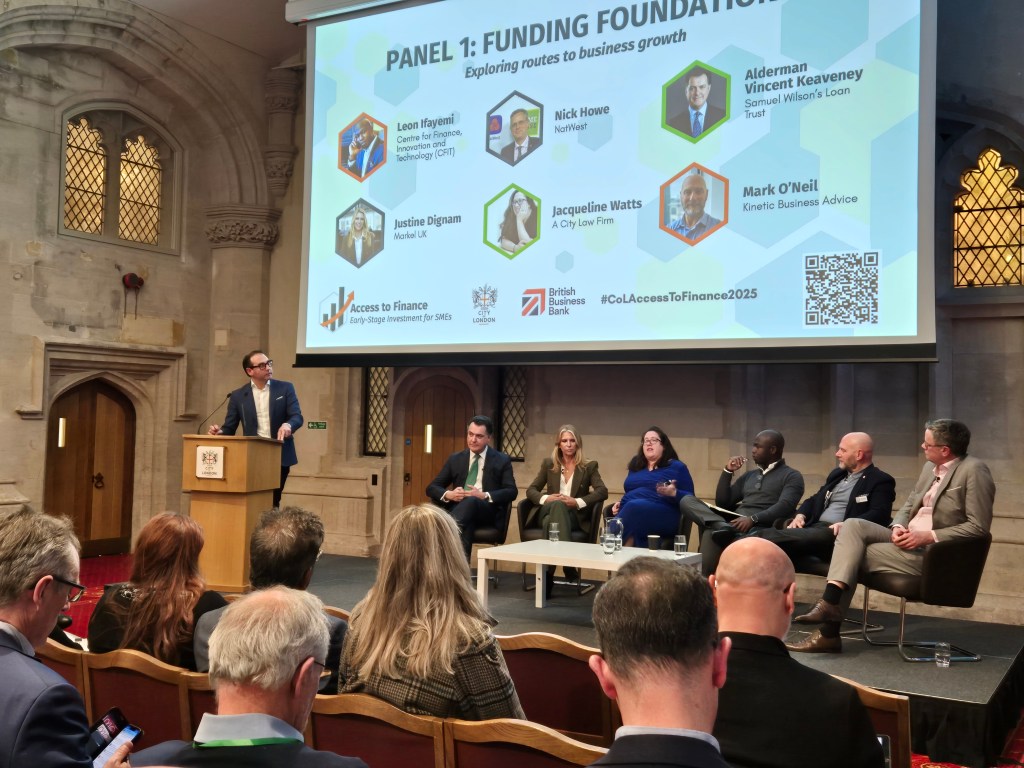
Rapid fire advice: Nuggets of wisdom you won’t want to miss
“Be comfortable being uncomfortable” – Nick Howe, NatWest
“Explore as much free finance as possible” – Justine Dignam, Markel UK
“Take your time to explore your options and make sure it’s right for you” – Jacqueline Watts, A City Law Firm
“Be diligent about who you take money from” – Leon Ifayemi, Centre for Finance, Innovation and Technology
“Research what funding option is right for you at the right time” – Mark O’Neil, Kinetic Business Advice
“Use your network and if you don’t have one, grow one” – Alderman Vincent Keaveney, Samuel Wilson’s Loan Trust
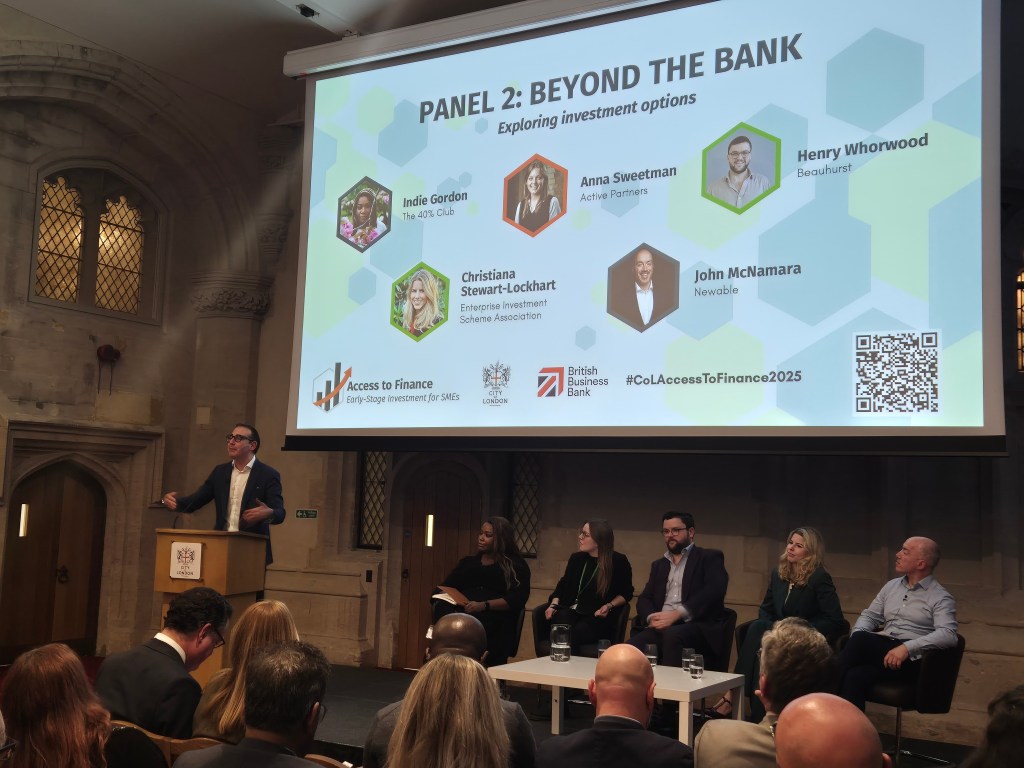
Nick David, Principal of Alator Capital:
- Learn iteratively as you go through the process of applying for funding.
- Timing is everything, so think very carefully about it.
- Do your research and be aware of the market.
- Work out how much your business plan requires and ask for that. Once you get your business off the ground, you can ask for more.
- Think very carefully about who you jump into investment with: VC relationships last a long time and splitting from them is difficult!
What funding options are available?
There is a wide range of funding options available to SMEs and startups, which can be overwhelming. At the same time, it means that there are options for whatever stage of your business journey you’re at, and whatever kind of business you’re running. Here are some of the options our experts discussed that you might want to consider:
- British Business Bank’s Start Up Loans and other business loans from banks
- Samuel Wilson’s Loan Trust and other loan schemes
- Grants
- Equity funding
- Crowdfunding
- Tax relief
- Invoice factoring
- SEIS/EIS
- Bootstrapping
Key takeaways: What to consider when exploring funding options
Our panellists and speakers had a lot of knowledge and advice to give which we can’t completely do justice to in a blog article. However, here are three main points they stressed as important when looking for funding.
Do your research and your due diligence
As early as possible, you should research what options exist, at what business stage they’re appropriate to apply for, and what they would require of you. For example, grants are usually most appropriate at the start of a business, in the research and product development stages, whereas equity funding is typically more suited when going to market or looking to grow, when you already have a developed, proven product and a clear idea of your customer base.
Certain types of funding may include personal liability, and others might require giving up a share of the company. You’ll need to be alert to understand what you’re entering into and what the implications are. You also need to make sure that you’ve determined what you’re willing to give up compared to what you’re receiving.
You’ll need to think about the amount of time you have available to dedicate to fundraising. Especially if you’re at the stage where VC funding might be relevant, it becomes almost an entire job in itself. Successful seed fundraisers may meet with over 45 VCs before raising funds, taking on average 15 weeks to complete.
While this shouldn’t discourage you from trying to acquire VC funding, you’ll need to think carefully about what it will take and if it’s right for your business to go for it at that time. It’s not right for everyone and sometimes companies end up chasing growth for the sake of growth rather than thinking about profit.
So, do your research and due diligence to apply for the right kind of funding, at the right time.
Take professional advice
This piece of insight was reiterated by almost every expert during the conference. Taking professional advice is the surest way to avoid pitfalls and make sure you understand what options are available and their requirements, which will save you both time and money in the long run.
For example, there is a lot of fraudulent activity around tax relief, so a simple Internet search might not be enough to understand what is sound information and what is not. There are also certain requirements, e.g. you need to have done a full financial year and be a limited company to use tax reliefs.
Similarly, SEIS/EIS funding can be complicated, and you could accidentally disqualify yourself from it if you haven’t taken professional advice. Two requirements that were mentioned at the conference were that you can’t release SEIS and EIS shares on the same day, and there are age limits on your business that are important to be aware of.
You can get advice from a range of places, many of them for free or at a low cost. Here is a quick guide to the various kinds of mentor or advice services you could encounter:
- Pro bono mentors: They will be looking to give back to their sector by providing free mentoring. They’ll have been where you are, know what you might be struggling with and how you might be able to solve it.
- Professional business mentors: Like pro bono mentors, they’ll have been where you are, but they’ll also have learnt the best way of navigating your struggles and are not simply relying on their own experiences.
- Advice services: There are many advice services out there, including Digital Boost, Association of Business Mentors, and of course us at SBREC. Some might offer more specific advice, but if you don’t know where to go, starting with some general advice will help you figure out where to go next.
Professional advice might cost you some time and money up-front, but you’ll come away with valuable information to make informed decisions for your business in the long term.

People need a reason to invest
There are many reasons why someone might choose to invest money into a business – but have you considered why an investor would invest specifically in your business?
Investors won’t make up that reason themselves; you have to give it to them.
In some sectors, like AI and climate tech, there is a lot of innovation and exciting developments and that’s reason enough for people to want to invest so they don’t miss out on the next big thing.
However, most of the time, and even if you are in one of those sectors, you’ll need to dig deeper. Make sure to target specialist investors in your niche – they’ll be more keen to invest in your business because it aligns with their values and passions.
When you’re talking about your business, whether in a formal pitching setting or not, tell a story. Talk about what pain point you’re solving for your customers and what impact your business has on them. Explain why you are the right person to solve these problems and why now is the right time to launch or grow your business. Create an emotional connection and a narrative thread, rather than just stating facts about your business.
Ultimately, the reason investors will want to invest in your business will vary widely depending on the business and the type of investment you’re looking for. But you need to be explicit about why your business is worth investing in, otherwise investors will look elsewhere.
Conclusion
Finding funding for your business is a tough part of starting and growing your business. It might feel insurmountable and difficult, but there is a lot of support available to help you. At SBREC, you can research investors, your market, and your customer base, to help you make a sound business plan and find the right options. Our Business Advisers can also help you figure out your next steps, what you need to do to get there, and can connect you with our partners who might be able to provide more specific advice or support.
Good luck with your fundraising, and if we can help you in any way, don’t hesitate to contact us on sbrec@cityoflondon.gov.uk!
 Small Business Research and Enterprise