

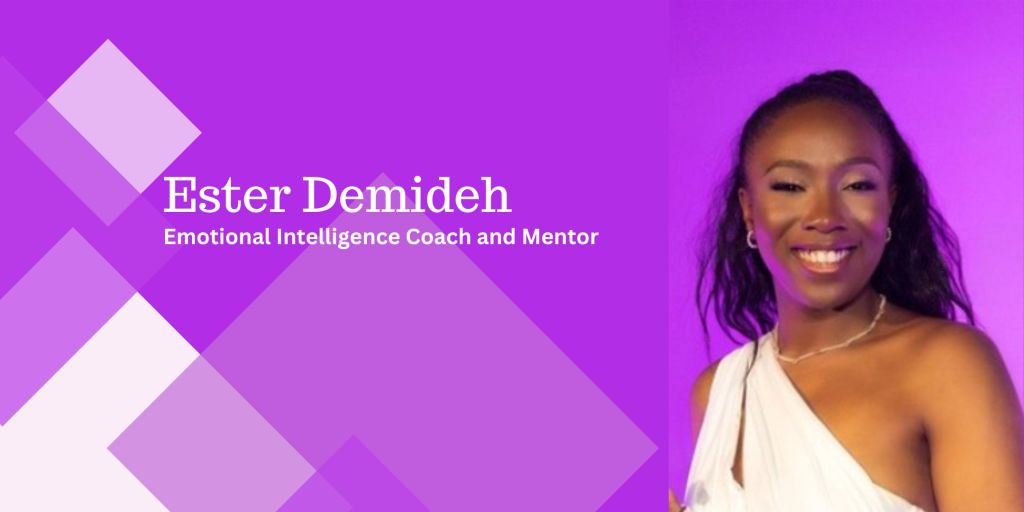
By: Ester Demideh, Emotional Intelligence Coach and Mentor
What is Impostor Syndrome?
Impostor syndrome refers to a psychological pattern of thinking characterised by persistent feelings of inadequacy, self-doubt, and fears of being exposed as a fraud (despite evidence to the contrary). The three defining features of ‘impostorism’ are:
- Fear that your ‘true’ abilities will be discovered.
- Belief that others hold an inflated perception of your abilities.
- Persistent tendency to attribute success to external factors rather than your own skills.
Take an Imposter Syndrome Test
The Impact of Impostor Syndrome on Entrepreneurs and Their Businesses
How common is it?
You may be surprised to learn how widespread impostor syndrome is among entrepreneurs.
- In a 2018 survey of 1,000 UK business owners, 24% said they had experienced impostor syndrome. Of this group:
- 56% reported a fear of failure.
- 51% said they constantly compare themselves to others.
- 38% admitted to second-guessing every decision they make.
- A NerdWallet survey conducted between 2018 and 2022 among 500 UK business owners and decision-makers found that:
- 78% reported experiencing impostor syndrome at some point.
- 47% said it was currently affecting them.
- 52% revealed that it was hindering their ability to lead their business or team effectively.
What Triggers Self-Doubt?
Entrepreneurs often encounter specific situations that heighten impostor syndrome. The top triggers include:
- Starting a new role or business (57% of business leaders reported this).
- Receiving praise in front of colleagues (55% of business leaders noted this as a trigger).
The Broader Impact on Work Performance
Impostor syndrome doesn’t just affect how entrepreneurs feel; it can also influence their actions and decisions:
- 59% of business leaders said they had considered leaving their job due to impostor syndrome. Many had actually left a previous position because of it.
- 31% admitted to considering leaving their role but had not yet followed through.
How to Challenge Impostor Syndrome Today
Let’s revisit the three core features of impostorism: the fear of having your ‘true’ abilities found out, the belief that others overestimate your abilities, and the tendency to downplay your achievements. To combat these patterns, it’s crucial to ground yourself in who you are and what you bring to the table. By doing so, you can disrupt the persistent thoughts and feelings that undermine your vision and purpose.
Activity 1: Refine Your Value Proposition
A well-defined value proposition acts as a compass, highlighting your strengths, expertise, and the specific ways you add value to your clients or customers. When you clearly understand and articulate your unique offerings, you shift your focus from self-doubt to tangible evidence of your competence. This clarity not only boosts self-confidence but also helps you communicate your worth more effectively, enabling you to feel more deserving of your successes and less likely to question your abilities.
Take the time to brainstorm your value proposition and be courageous enough to speak to your audience for feedback. Their input can help you refine and develop a more accurate and authentic understanding of what you offer. On a personal level, ask yourself what you really want to contribute to the world and what you want your customers to experience. Focus on this, it will keep you motivated and anchor your sense of purpose.
Activity 2: Challenge your negative bias
Our brains process a vast amount of information every second, so they simplify things by favouring information that aligns with our existing beliefs. This is often referred to as “confirmation bias.” If you believe you’re an impostor, your brain will focus on evidence supporting this belief while ignoring evidence that contradicts it.
Here’s an activity to counter this:
- Take a piece of paper and create a table with the following headings:
| Belief: I am an Impostor | Belief: I am not an Impostor |
| Evidence For: | Evidence Against: |
- Write down only evidence under each column. No feelings or thoughts—just factual evidence.
This exercise helps you step back from the overwhelming feelings of impostorism and see things objectively. Often, you’ll find that the evidence against being an impostor outweighs the evidence for it.

Activity 3: Develop A Growth Mindset & Experiment
Now that you’ve challenged your biases, it’s time to adopt a mindset that fuels progress.
A growth mindset is the belief that skills and intelligence can be developed through dedication, effort, and learning. It fosters resilience and a love of learning, both essential for overcoming impostor syndrome.
Unfortunately, impostor syndrome often prevents individuals from taking opportunities such as promotions or leadership roles because of a fear of being “exposed.” This behaviour leads to inappropriate goal-setting, missed opportunities, and poorer outcomes. For example:
“I don’t have a degree in IT. If I pitch my tech innovation, people will realise I’m a fraud, and I’ll be rejected. Let me not apply for this funding bid.”
In this example, the fear of rejection caused the loss of a £25K funding opportunity. By not testing how others respond to your ideas or offers, you miss out on experiences that could provide the evidence you need to challenge your limiting beliefs.
Experiment: Start Small
Adopt the mindset of a learner. Focus on experimenting and collecting honest, objective feedback rather than tying your success to financial metrics or engagement numbers. Here’s an example from my personal experience:
When I first became certified as a coach, I felt impostor syndrome as a young professional. I doubted my expertise and questioned if I knew enough. To overcome this, I volunteered to join the coach trainers’ team at the organisation where I was certified, offered drop-in sessions, and joined co-coaching forums. I also kept a coaching log.
These small steps allowed me to objectively gauge my competence. Over time, I collected enough evidence to see that I was, in fact, an excellent coach. This empowered me to embrace larger opportunities with confidence and, ultimately, conquer my impostor syndrome.
Final thoughts, approach your journey with humility. You don’t need to project an outward image of perfection. Start where you are, gather evidence of your capabilities, and let this evidence propel you forward.
Conclusion: Overcoming Impostor Syndrome with Confidence and Clarity
By refining your value proposition, challenging limiting beliefs, and adopting a growth mindset, you’re taking powerful steps to overcome impostor syndrome. As a small business owner, remember that you are not alone in this journey. Your ability to lead, innovate, and inspire starts with believing in yourself—and I’m here to help you every step of the way.
Be part of a community of entrepreneurs overcoming impostorism by joining my ‘Overcoming Impostor Syndrome’ course on 17th February or 24th March 2025. Use code SBREC20 for £20 off. Only two dates are available—don’t miss out!
About Me
My name is Ester Demideh, I’m a certified coach specialising in Emotional Intelligence (EQ), I help entrepreneurs develop sustainable strategies for professional growth and personal leadership. My approach focuses on creating lasting, intentional improvements in decision-making, workplace relationships, and personal performance.
What I Can Do For You?
1:1 Impostor Syndrome Coaching and Mentoring Programme: A personalised, results-driven programme designed to help you push back on negative self-talk, excessive worrying and self-sabotage through evidence-based strategies.
As a coach, I will help you boost your professional confidence, enhance motivation, optimise performance, deepen self-awareness, and cultivate self-responsibility. I’m currently accepting a limited number of personalised coaching partnerships this month, ensuring each entrepreneur receives dedicated, tailored support.
The programme includes:
- Root Cause Analysis: Using evidence-based psychometric testing to identify the underlying causes of impostor syndrome and create a personalised strategy for growth.
- Coaching Software Support: Keeping you accountable with regular messaging, reminders, and progress tracking to ensure consistent growth.
- Guided Habit Formation: Leveraging neuroplasticity techniques to replace self-sabotaging behaviours with healthy, sustainable habits that build a resilient mindset.
I strive to accommodate neurodivergent clients by incorporating tools such as transcript software and flexible coaching methods, with a commitment to continuously improving accessibility.
If you’re ready to make lasting changes, let’s connect for a 15-minute consultation to discuss the various ways I can support you or explore how this programme can transform your personal and professional life.”
📲 Follow me on any of my socials
*We strive to do our best when supporting small business and their growth. Our business databases can give you information and data that can help you with advertising, market research, company information, and industry factsheets. If you have already taken the plunge, we would love for you to join us at a seminar, our workshops cover digital marketing, business model canvas and planning, demystifying taxes and intellectual property to name a few. Visit our events page or website for more information.
 Small Business Research and Enterprise
One thought on “Impostor Syndrome among entrepreneurs: Actionable solutions”